
WSSD High School is a college-preparatory Waldorf education for grades 9 through 12 — and the only Waldorf high school in San Diego County. This is where the full promise of a Waldorf education comes into focus. Students don’t just study the world; they investigate it.
Where artists learn to think like scientists — and scientists learn to see like artists.
They spend their week building engines, studying the Supreme Court, painting self-portraits and working through calculus in the same week. Each morning opens with a 110-minute seminar: deep, unhurried, immersive work in a single subject. The four years form one integrated whole, crafted to grow with the student — from careful observation in ninth grade to confident synthesis by twelfth.
In brief
Four years built as one whole
High school is where the full promise of a Waldorf education comes into focus. Across grades 9 through 12, students don’t just study the world — they investigate it: building engines, studying the Supreme Court, painting self-portraits and working through calculus in the same week. The four years form one integrated whole, and each grade is shaped to meet a real stage of growing up — from careful observation in ninth grade to confident synthesis by twelfth.
The 110-minute seminar
Every day starts with depth
Every school day opens with the seminar — a 110-minute period devoted to intensive work in a single subject, held for a three- to four-week block. It’s long enough to read closely, discuss, observe, and investigate without the bell cutting a thought in half. It’s the kind of sustained focus most high school timetables never allow — and it’s how WSSD students experience a subject’s real breadth and depth.
After the seminar, the day moves into shorter track classes — mathematics, humanities, Spanish, art, eurythmy, athletics — and, midweek, two-hour electives ranging from industrial arts to jazz band to a course on the Supreme Court.
A curriculum that grows with the student
WSSD students take the full college-preparatory core every year — English, mathematics, laboratory science, history, and Spanish — alongside fine art, music, movement, and athletics. What changes across the four years is the kind of thinking each grade asks for.
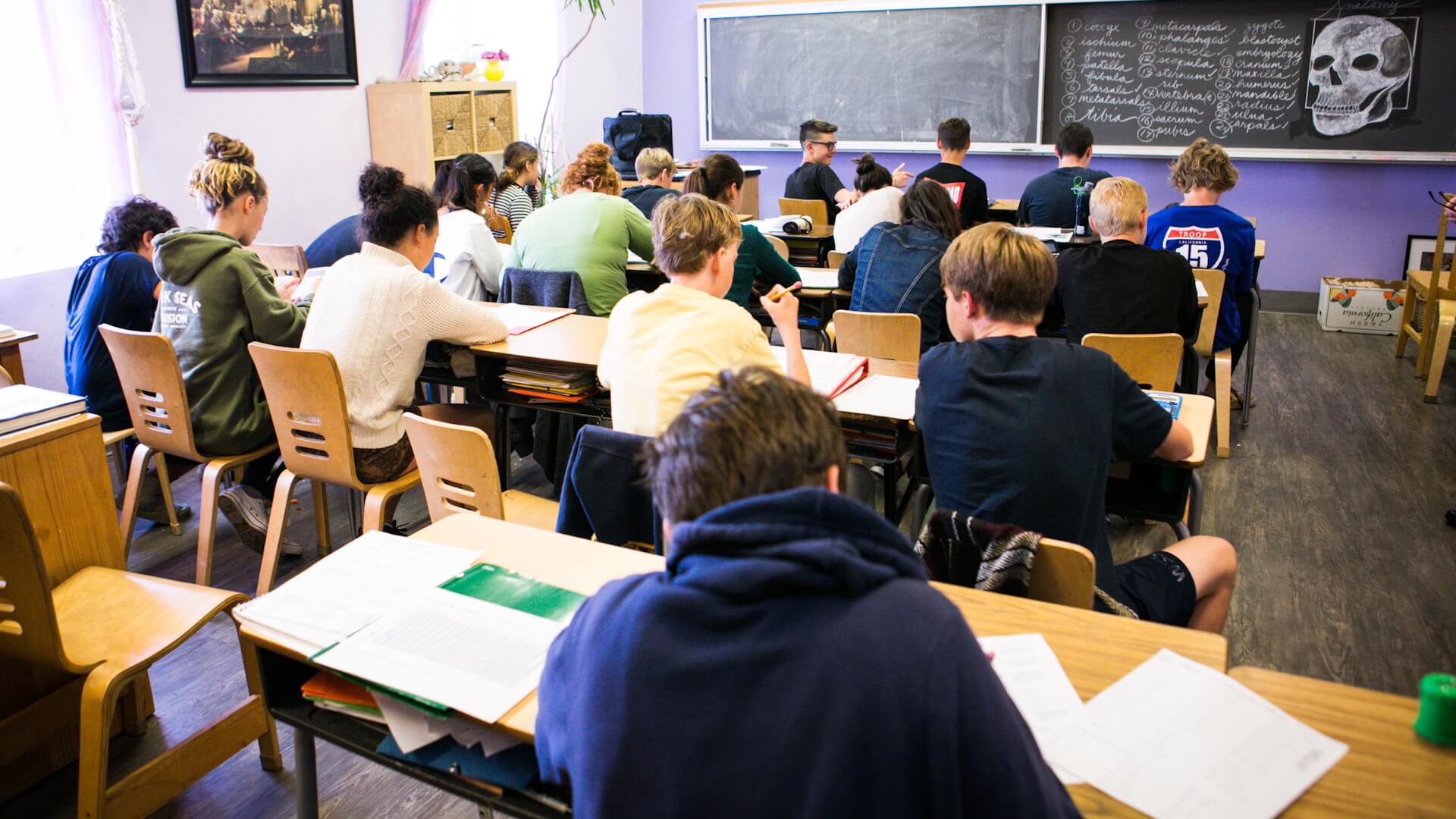
Observation
As old certainties open up to question, ninth grade builds firm ground: accurate, unprejudiced observation. Students draft the Platonic solids in descriptive geometry, calibrate their own thermometers in thermal physics, and trace three eras of theater from Ancient Greece to modern America.
Comparison
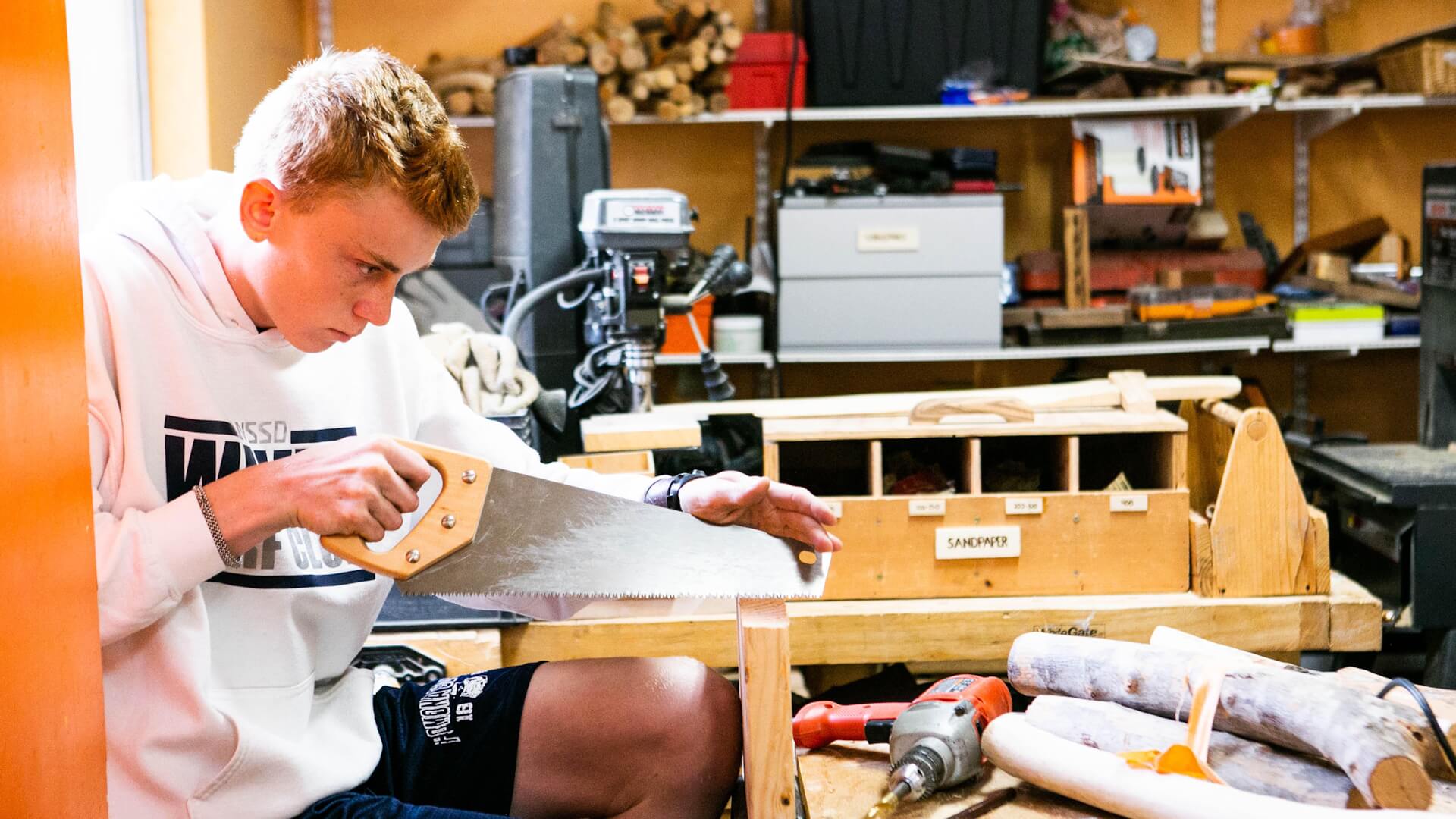
Tenth grade sharpens the powers of comparison and judgment. Students survey the land with trigonometry and build a topographic map, repeat the classic experiments of Copernicus, Kepler, and Galileo in mechanics, and trace the rise and fall of the ancient empires.
Analysis
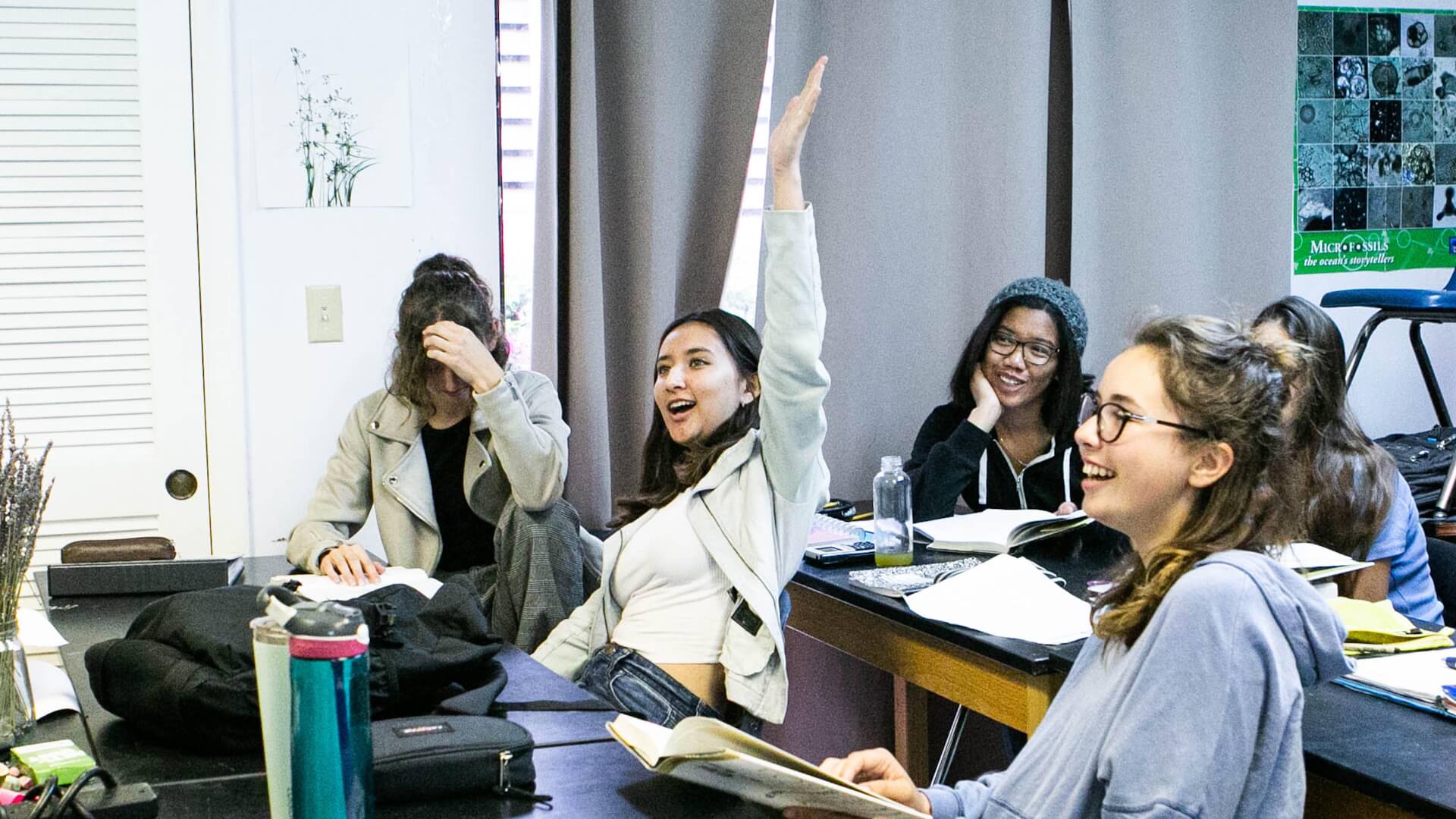
Eleventh grade is the year of analysis — discerning meaning and purpose. Students take on Parzival, Dante, and Hamlet in English, electricity and magnetism in physics, and projective geometry. It’s also when each student chooses a senior project topic.
Synthesis
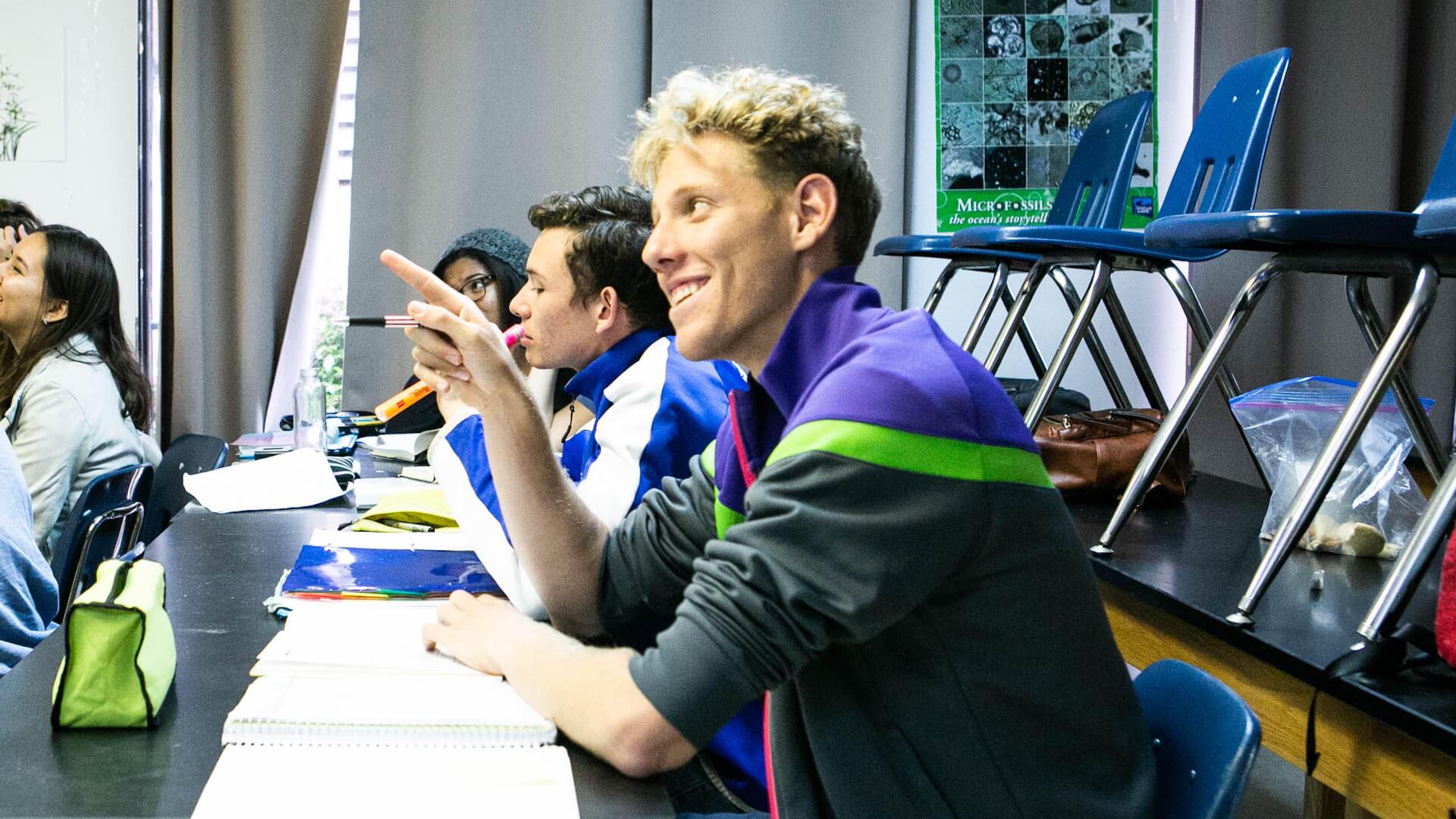
Twelfth grade draws it together: the capacity for synthesis, and for understanding how the human being and the natural world have evolved. Seniors work through calculus, Russian literature, biochemistry, and a history-of-architecture course — and complete the senior project they have been building toward.
Where four years of depth leads
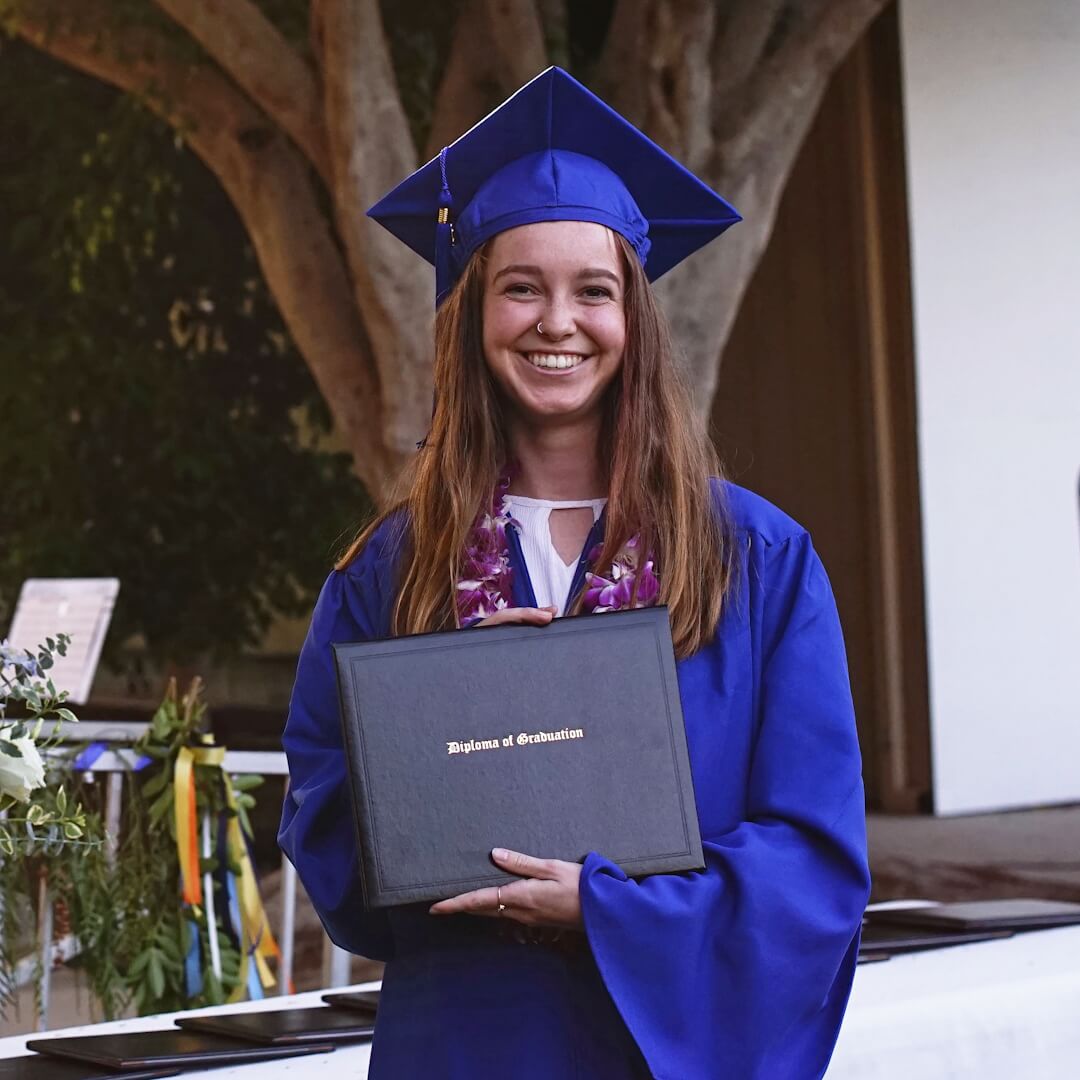
Parents considering a Waldorf high school ask one question more than any other: will my child be ready for college? At WSSD, the answer is in the outcomes.
- 94% of WSSD graduates go on to attend college.
- 98% are admitted to one of their top two schools.
- 88% go on to graduate from college — against a national average of roughly half.
The seminar is part of why. A student who has spent four years in 110-minute periods — reading closely, defending an argument, sustaining attention on one hard problem — walks into a college lecture hall already fluent in how college actually works.

WSSD students have been accepted to diverse and acclaimed universities










Already a Waldorf family?
Don’t start over at 9th grade. Most Waldorf schools in California end at 8th grade. For families committed to a Waldorf education, that turns the move to high school into a hard fork: leave the approach that has shaped your child’s whole education so far, or find one of the few schools that carries it through.
WSSD is one of those few — the only full Pre-K–12 Waldorf program in Southern California. For a Waldorf 8th-grader, that means ninth grade can be a continuation, not a restart. Families have made it work from well beyond San Diego, and our admissions team is glad to talk through what that can look like.
Common questions High School parents ask
Does WSSD High School have AP classes?
No — and that’s deliberate. Instead of teaching to an AP exam, WSSD’s classes are college-preparatory by design, often going further than an AP course in depth and discussion. Colleges read a Waldorf transcript in context, and WSSD’s outcomes bear that out.
What is the WSSD college acceptance rate?
94% of WSSD graduates go on to attend college, and 98% are admitted to one of their top two schools. 88% go on to graduate — well above the national average of about 50%.
How long are the class periods?
The day opens with a 110-minute seminar devoted to one subject, followed by shorter 45-minute track classes and, midweek, two-hour electives.
We’re a Waldorf family relocating to San Diego — how does enrollment work?
WSSD enrolls students into high school from other Waldorf schools regularly, and admissions runs year-round on a rolling basis. The process starts with an inquiry and a tour; after that, the student spends a shadow day with a buddy so the fit is real before any decision. Contact admissions at (619) 280-8016 to start.
Can a student with no prior Waldorf experience enroll at WSSD?
Yes. Many students find that the Waldorf approach suits them quite well. WSSD high schoolers come from public, independent, or other private schools — no Waldorf background is required. The process starts with an inquiry and a tour; the student then spends a shadow day at WSSD with a current student so they can sit in on a seminar and meet faculty before any decision. New students are supported in their first weeks as they settle into the rhythm of a Waldorf high school day.
Is it possible to enroll my high schooler if they have no prior Waldorf experience?
Most students enter WSSD High School in 9th grade, and transfers into 10th and 11th grade are welcome and happen each year. Twelfth-grade entry is more limited — seniors complete a major independent project they typically build toward across earlier grades — so 12th-grade transfers are considered case by case in conversation with admissions. Contact admissions at (619) 280-8016 to talk through your child’s specific situation.
Latest from WSSD
News and blogposts

When It Comes to Communication Technology, Old School is the Best School
When It Comes to Communication Technology, Old School is the Best School
Read More
Diwali Celebration at Altadena Campus
Diwali Celebration at Altadena Campus
Read More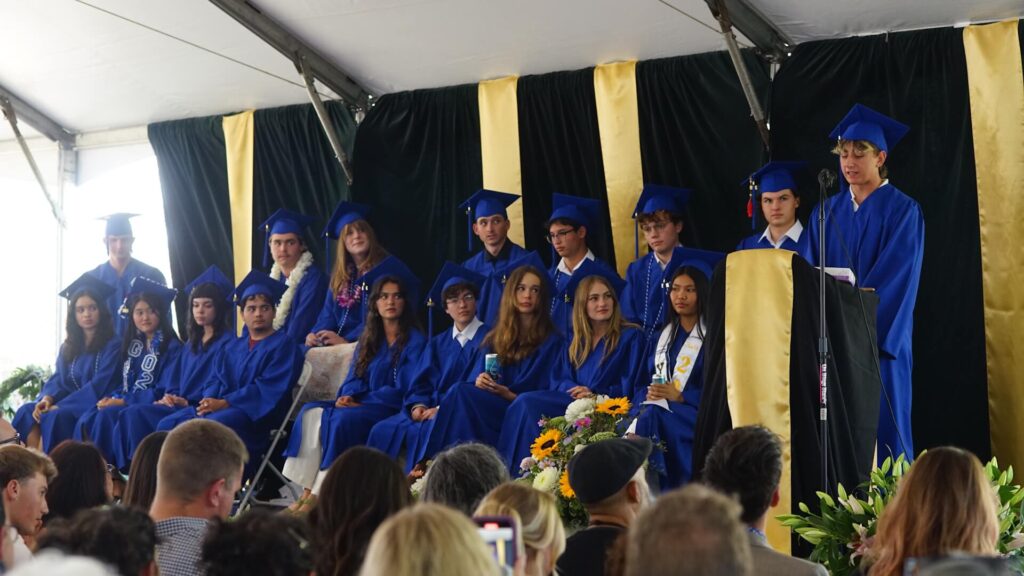
Alum Spotlight: A Legacy of Innovation and Stewardship
Alum Spotlight: A Legacy of Innovation and Stewardship
Read More
Nurturing Spiritual Growth: Cultivating a Conscious Community
Nurturing Spiritual Growth: Cultivating a Conscious Community
Read More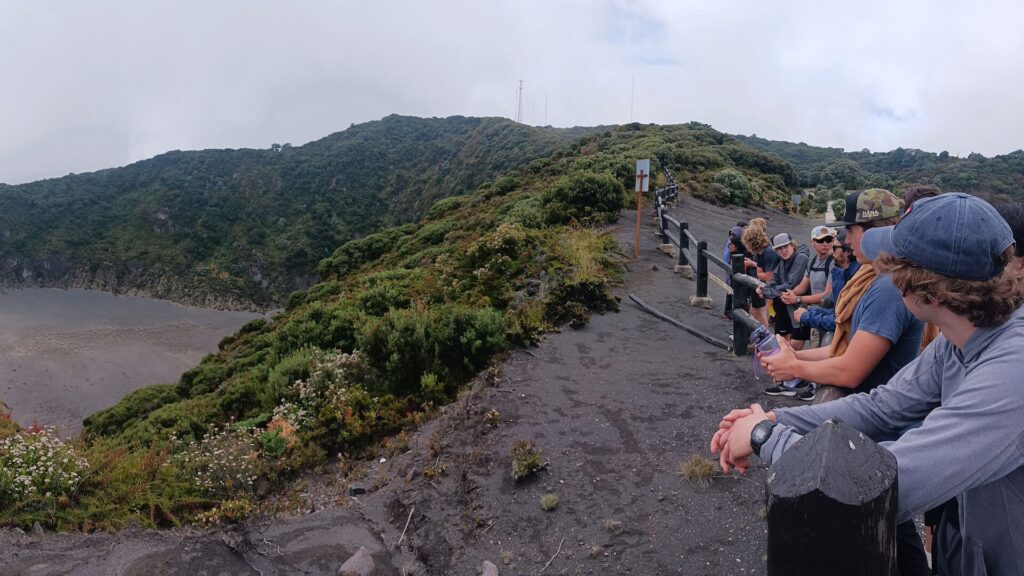
Journey of Service and Connection: A Costa Rica Class Trip Journal with the 11th Grade
Journey of Service and Connection: A Costa Rica Class Trip Journal with the 11th Grade
Read More
Honoring Our Teachers’ Commitment to Equity: Insights from the Teaching for Black Lives Training
Honoring Our Teachers’ Commitment to Equity: Insights from the Teaching for Black Lives Training
Read More
The Return of the Hot Lunch Program: Mekeni! Mangan Tana! Come through! Let’s Eat!
The Return of the Hot Lunch Program: Mekeni! Mangan Tana! Come through! Let’s Eat!
Read More
A Title Worthy of the Role: Why Our Early Childhood Teachers Are Now Simply “Teacher”
A Title Worthy of the Role: Why Our Early Childhood Teachers Are Now Simply “Teacher”
Read MoreThe best way to understand a Waldorf education is to see it.
Tours run regularly throughout the school year — about 60 to 90 minutes, with time to ask the questions a website can’t answer.